


Monster Train
Good Shepherd Entertainment
I spent time with Monster Train as a mobile card game and quickly found that its appeal comes from making every run feel like a chain of meaningful decisions rather than a simple sequence of battles. It is a roguelike deckbuilder from Good Shepherd Entertainment, built for players who enjoy adapting a plan when the cards, enemies, and rewards do not cooperate. The free entry point makes it easy to try, but the real question is whether its demanding style suits the way you like to play.
How Monster Train feels on mobile
The basic idea is easy to understand: build a deck, fight through a run, improve your strategy, and try again after a defeat. The difficult part is making those choices work together. A card that looks weak by itself can become valuable when it supports the right sequence, while a powerful-looking addition can make a deck less consistent. That tension is what kept me interested.
I would not describe this as a relaxed card game where you can tap through encounters without thinking. Even when the controls are simple, the decisions can become layered. You have to consider immediate survival, future battles, the shape of your deck, and whether a reward helps your main plan or merely looks attractive in isolation. I often found myself pausing before a choice because the safest option was not always the option that gave the run the best long-term chance.
The mobile format suits short sessions surprisingly well. A single run can be approached as a focused play session, but the structure also makes it natural to play in smaller pieces when you have a spare moment. The important distinction is that this is not a game I would recommend playing while distracted. If I opened it while trying to watch something else, I missed details that mattered and made poorer decisions as a result.
Learning the rhythm of a run
My first useful adjustment was to stop treating every reward as an upgrade. In many card games, adding more options feels automatically positive. Here, a larger deck can also make the cards you actually need appear less reliably. I began asking a stricter question after each encounter: does this choice improve the deck's central idea, or am I taking it simply because it seems strong?
Related News






That change made the game more understandable. Instead of collecting cards without a clear direction, I started building around a small number of dependable interactions. This is one of the less obvious strengths of the design. The game teaches deck discipline through consequences rather than through long explanations. A run that becomes unfocused usually reveals the problem later, when the deck cannot produce the right answer at the right time.
Another practical lesson is to value flexibility early and specialization later. At the beginning of a run, I prefer choices that help me handle several situations. Once the deck has a stable foundation, more focused improvements become worthwhile. Committing too early can leave a run vulnerable, while refusing to commit at all can produce a collection of individually reasonable cards that never work as a team.
Why the card battles stay interesting
The strongest moments come from turning a difficult board into a manageable one through planning rather than luck alone. I enjoy the feeling of spotting a sequence several actions ahead, especially when a defensive move creates the opening for a stronger attack later. The game rewards players who think in terms of turns and combinations instead of judging each card independently.
Gallery
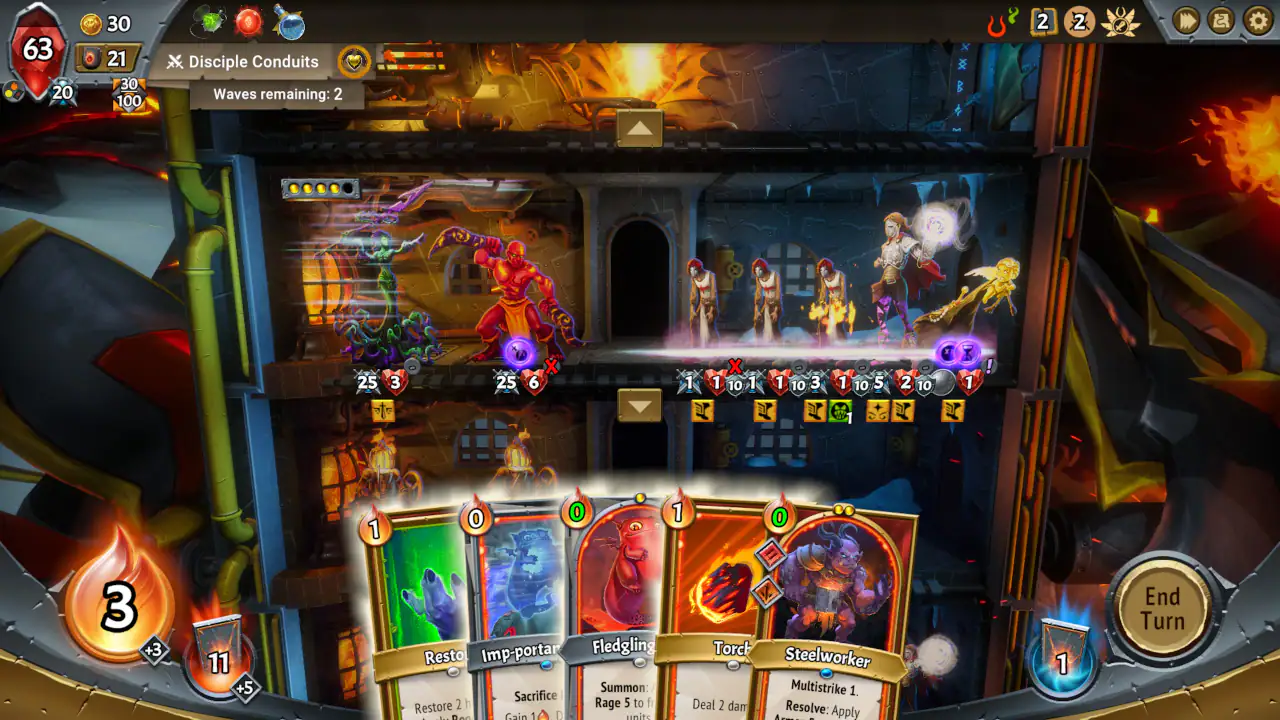
That does not mean every loss feels perfectly fair or perfectly educational. Random rewards can leave me with awkward options, and sometimes a run begins in a direction that is difficult to rescue. Still, the randomness generally creates variety rather than chaos. I usually understood why a run failed, even when I wished the available choices had been better.
A useful habit is to inspect the whole turn before spending resources. It is tempting to play the most impressive card immediately, but preserving a cheaper effect or setting up a later action can produce a better result. I also found it helpful to think about the next encounter before finishing the current one. A victory that leaves the deck poorly prepared can be less valuable than a slower, safer line that preserves the tools needed afterward.
Cost, access, and what value means here
The game is free to access, which changes how I judge it. You can try the core experience without paying an entry price, so the first decision is not whether the full asking price is justified. It is whether the free version gives you enough of the experience to decide if this demanding card format is for you. In my view, that makes the barrier to experimentation low.
There are in-app purchases priced at $9.99 per item. I would treat those as a separate value decision rather than assuming that free access automatically means the complete experience has no cost. If you enjoy the initial experience and want to spend more, the sensible approach is to decide based on how much you expect to play, not on pressure created by a difficult run or a temporary losing streak.
For me, the free availability is most valuable because it lets the game prove its design before I spend anything. Some players will immediately appreciate the deckbuilding depth; others will discover that repeated runs, uncertain rewards, and careful resource management feel tiring. Trying it first is more useful than judging it by screenshots or by the short store summary.
The game's age rating is Everyone 10+, and that makes it a reasonable option for older children and adults who already enjoy strategic card games. I would still consider the complexity and frustration level when choosing it for a younger player. The content rating does not change the fact that the game expects patience, reading, and a willingness to learn from failed attempts.
Where the experience can become frustrating
The biggest trade-off is that the same randomness that keeps runs fresh can also make progress feel uneven. A player who wants a carefully controlled campaign may dislike having to rebuild a plan repeatedly. I enjoy that uncertainty, but I understand why someone looking for a straightforward progression system might prefer a conventional card battler with more predictable unlocks and battles.
There is also a real mental workload. The interface may be approachable, yet the decisions become demanding as a run develops. New players can easily focus on dealing damage while overlooking positioning, future resources, or the effect of adding too many cards. I had to accept that losses were part of the learning process rather than evidence that the game was badly balanced.
Mobile play introduces another consideration: screen space. Card games depend on readable text and clear information, and a smaller display can make careful inspection less comfortable than playing on a larger screen. I found the experience workable, but I would not choose it for every situation. If I am tired, rushing, or using a device that makes text difficult to examine, the strategic detail becomes more of a burden than a pleasure.
The version I reviewed is 2.3.9 and it requires Android 9 or later. That matters if you are using an older device, because compatibility is part of the practical value of any mobile game. On a supported phone, the main concern is not learning the controls; it is having enough attention to make good decisions. Players who want a game for quick reflexes may find the deliberate pace less exciting.
Small habits that improve a run
I recommend taking a moment to identify the deck's actual win condition before choosing optional additions. If the deck is already effective at one job, adding another unrelated plan can dilute it. This is especially important after a successful battle, when the reward screen makes every new card look tempting.
I also try to preserve answers for difficult turns instead of spending everything to make an easy encounter look impressive. A modest victory with resources left over is often more useful than a dramatic victory that leaves the deck exposed. This approach helped me avoid a common mistake: confusing immediate efficiency with long-term strength.
Another useful workflow is to review a failed run while the decisions are still fresh. I ask whether the problem was a weak card choice, an oversized deck, poor resource timing, or an earlier commitment that limited later options. That short review turns repetition into practice. Without it, restarting can feel like repeating the same experiment with different random results.
Finally, I suggest experimenting with a clear purpose. Trying a different style is worthwhile, but changing every decision at once makes it hard to understand what worked. I get more from the game when I test one idea, observe its weaknesses, and then adjust the next run. That method is slower than chasing every powerful-looking option, but it produces a better grasp of the systems.
Who will get the most from it
Monster Train is a strong fit for players who enjoy card games that reward planning, adaptation, and repeated attempts. If you like examining a reward, predicting future problems, and building a deck that becomes more coherent over time, there is a lot here to appreciate. The 4.7 average from around 5.3 thousand ratings also suggests that many players respond well to its particular blend of challenge and replayability.
It is especially suitable for someone who wants a game that can occupy both a short break and a longer focused session. I can imagine playing a few decisions during a commute or settling in for a complete run at home. The key is that the session length may be flexible, but the attention required is not. It works best when you can give the board your full focus.
The game is less suitable for players who dislike restarting, who want a fixed story path, or who prefer direct action over card evaluation. It may also be a poor choice for someone seeking a purely casual experience with little consequence for mistakes. In those cases, a simpler card game or a more predictable strategy title would probably offer better value, even if it has fewer tactical surprises.
Compared with ordinary collectible card games, this approach feels less dependent on constructing a perfect deck before playing. The run itself is where much of the construction happens, so I spend more time adapting to circumstances and less time worrying about a permanent collection. Compared with a traditional solitaire-style card game, it offers far more strategic planning, but also asks much more from the player. Neither comparison makes it universally better; they clarify what kind of enjoyment it provides.
My final recommendation
After playing it, I see the free access as the most convincing reason to give it a fair trial. You can discover whether the roguelike structure, deck management, and repeated learning cycle match your taste before considering any $9.99 purchase. That is a better proposition than paying upfront for a style you may find too demanding.
I would recommend it to a friend who enjoys thoughtful card battles and does not mind losing while learning. I would explain that its best moments come from making a coherent plan under imperfect conditions, not from collecting the biggest possible pile of powerful cards. I would also warn that the game can feel unforgiving when a run goes in an awkward direction or when a small early mistake limits later choices.
With over 100 thousand installs, it has clearly reached a substantial mobile audience, and I can understand why. Its appeal is not a flashy promise of effortless progress; it is the satisfaction of gradually recognizing patterns and making better decisions. The developer, Good Shepherd Entertainment, has delivered a card game that rewards attention rather than speed.
My verdict is simple: try it if you want a serious mobile deckbuilder with replayable runs and meaningful trade-offs. Skip it if you want predictable progression, low-pressure play, or a game that can run comfortably in the background. For the right player, the strongest value is the chance to test the full style before spending more, then decide whether the depth justifies any optional purchase.
In my experience, Monster Train is at its best when I treat each run as a lesson instead of a verdict. A defeat is disappointing, but it usually leaves me with a specific question to answer next time: did I choose the wrong card, build too broadly, or spend my resources too early? That kind of useful friction is exactly why I keep returning, and it is also the clearest reason this game will not suit everyone.
FAQs for Monster Train
What is Monster Train?
Monster Train is a strategic deck-building roguelike set on a train traveling through the underworld. You build a deck of monster units and powerful spells, place them across multiple train floors, and defend the Pyre from waves of enemies. Each run offers different cards, upgrades, champions, and challenges, so successful play depends on planning, adapting your strategy, and making smart choices between battles.
Is Monster Train free to play on Android or iOS?
Monster Train is generally offered as a premium game rather than a traditional free-to-play title, although availability, pricing, and included content can vary by platform and region. Before downloading, check the official Google Play Store or App Store listing for the current price and edition details. The game is designed to provide its core experience without relying on energy timers or constant advertisements.
Does Monster Train require an internet connection?
Monster Train is primarily a single-player experience, and its main campaign and run-based gameplay can usually be enjoyed without a continuous internet connection. You may still need internet access to download the game, install updates, restore purchases, or use platform-related services. Offline availability can depend on the device and version, so checking the store description is recommended before traveling or playing without data.
Is Monster Train difficult for new players?
Monster Train is easy to understand at a basic level, but its strategic depth can make the first few runs challenging. You must manage limited space, choose effective card combinations, protect your Pyre, and decide when to upgrade units or visit alternative locations. Losing a run is part of the learning process, and repeated attempts gradually unlock clans, cards, and strategies that make the game more approachable.
What makes Monster Train different from other deck-building games?
Monster Train stands out through its multi-floor combat system and emphasis on positioning. Instead of fighting on a single battlefield, you arrange units on several levels of the train, allowing enemies and allies to move between floors as battles progress. Champions, clan combinations, card upgrades, artifacts, and branching route choices create a large number of possible builds, giving each run a distinct tactical identity.
Pros
- Deep deck-building offers plenty of strategic variety.
- Distinct clans and card combinations make each run feel different.
- Multi-level battles add more tactical depth than standard lane combat.
- Runs are challenging but rewarding for experienced strategy players.
- Strong replay value through unlocks
- mutators
- and varied strategies.
Cons
- The mechanics can feel overwhelming for newcomers.
- Some runs depend heavily on favorable card and artifact draws.
- Visual presentation is functional but less polished than leading rivals.
- Longer runs may be difficult to finish during short play sessions.
- Limited story impact may disappoint players seeking a narrative campaign.


